AWK-3262A SERIES
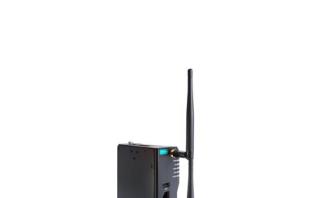
Advanced industrial Wi-Fi 6 (802.11ax) wireless AP/bridge/client with 1 10/100/1000/2500BaseT(X) and 1 10/100/1000BaseT(X) port, IP30, US band, -25 to 60°C operating temperature
WLAN Interface
- WLAN Standards: 2.4 GHz: 802.11ax with 1024 QAM support, 20/40 MHz5 GHz: 802.11ax with 1024 QAM support, 20/40/80 MHzWMM for QoS
- Frequency Band for US (20 MHz operating channels): DFS (Dynamic Frequency Selection) channel support: In AP mode, when a radar signal is detected, the device will automatically switch to another channel. However, according to regulations, after switching channels, a 60-second availability check period is required before starting the service.
- Frequency Band for US (20 MHz operating channels): DFS (Dynamic Frequency Selection) channel support: In AP mode, when a radar signal is detected, the device will automatically switch to another channel. However, according to regulations, after switching channels, a 60-second availability check period is required before starting the service.
- Frequency Band for US (20 MHz operating channels): 5.500 to 5.700 GHz (11 channels)
- Frequency Band for US (20 MHz operating channels): DFS (Dynamic Frequency Selection) channel support: In AP mode, when a radar signal is detected, the device will automatically switch to another channel. However, according to regulations, after switching channels, a 60-second availability check period is required before starting the service.
- Frequency Band for US (20 MHz operating channels): 5.745 to 5.825 GHz (5 channels)
- Wireless Security: WPA/WPA2/WPA3-Enterprise (IEEE 802.1X/RADIUS, TKIP, AES) WPA/WPA2/WPA3-Personal
- Wireless Roaming: 802.11k/v/r
- Wireless Roaming: The Turbo Roaming recovery time indicated herein is an average of test results documented, in optimized conditions, across APs configured with interference-free 20-MHz RF channels, WPA2-PSK security, and default Turbo Roaming parameters. The clients are configured with 3-channel roaming at 100 Kbps traffic load. Other conditions may also impact roaming performance. For more information about Turbo Roaming parameter settings, refer to the product manual.
- Wireless Roaming: 802.11k/v/r
- Wireless Roaming: 802.11k/v are not supported in Client-based modes.
- Transmission Rate: 2.4 GHz:Up to 573.5 Mbps5 GHz:Up to 1,201 Mbps
- Transmitter Power for 802.11a (Dual Chain): When the ambient operating temperature exceeds 70°C, the maximum transmitter power should be set to 24 dBm to prevent performance degradation.
- Transmitter Power for 802.11a (Dual Chain): When the ambient operating temperature exceeds 70°C, the maximum transmitter power should be set to 24 dBm to prevent performance degradation.
- Transmitter Power for 802.11a (Dual Chain): ±1.5 dBm @ 6 Mbps 24.5
- Transmitter Power for 802.11a (Dual Chain): When the ambient operating temperature exceeds 70°C, the maximum transmitter power should be set to 24 dBm to prevent performance degradation.
- Transmitter Power for 802.11a (Dual Chain): ±1.5 dBm @ 54 Mbps
- Transmitter Power for 802.11n (5 GHz, Dual Chain): 26±1.5 dBm @ MCS0 20 MHz 22±1.5 dBm @ MCS7 20 MHz 26±1.5 dBm @ MCS0 40 MHz 22±1.5 dBm @ MCS7 40 MHz
- Transmitter Power for 802.11ac (Dual Chain): 26±1.5 dBm @ MCS0 20 MHz 22±1.5 dBm @ MCS8 20 MHz 25±1.5 dBm @ MCS0 40 MHz 21±1.5 dBm @ MCS9 40 MHz 25±1.5 dBm @ MCS0 80 MHz 21±1.5 dBm @ MCS9 80 MHz
- Transmitter Power for 802.11ax (Dual Chain): 25±1.5 dBm @ MCS0 20 MHz 20±1.5 dBm @ MCS11 20 MHz 25±1.5 dBm @ MCS0 40 MHz 20±1.5 dBm @ MCS11 40 MHz 25±1.5 dBm @ MCS0 80 MHz 20±1.5 dBm @ MCS11 80 MHz
- Transmitter Power for 802.11b (Dual Chain): When the ambient operating temperature exceeds 70°C, the maximum transmitter power should be set to 26 dBm to prevent performance degradation.
- Transmitter Power for 802.11b (Dual Chain): When the ambient operating temperature exceeds 70°C, the maximum transmitter power should be set to 26 dBm to prevent performance degradation.
- Transmitter Power for 802.11b (Dual Chain): ±1.5 dBm @ 1 Mbps 29
- Transmitter Power for 802.11b (Dual Chain): When the ambient operating temperature exceeds 70°C, the maximum transmitter power should be set to 26 dBm to prevent performance degradation.
- Transmitter Power for 802.11b (Dual Chain): ±1.5 dBm @ 11 Mbps
- Transmitter Power for 802.11g (Dual Chain): 27±1.5 dBm @ 6 Mbps 26±1.5 dBm @ 54 Mbps
- Transmitter Power for 802.11n (2.4 GHz, Dual Chain): 26±1.5 dBm @ MCS0 20 MHz 24±1.5 dBm @ MCS7 20 MHz 26±1.5 dBm @ MCS0 40 MHz 24±1.5 dBm @ MCS7 40 MHz
- Transmitter Power for 802.11ac (2.4 GHz, Dual Chain): 26±1.5 dBm @ MCS0 20 MHz 24±1.5 dBm @ MCS8 20 MHz 26±1.5 dBm @ MCS0 40 MHz 23±1.5 dBm @ MCS9 40 MHz
- Transmitter Power for 802.11ax (2.4 GHz, Dual Chain): 26±1.5 dBm @ MCS0 20 MHz 21±1.5 dBm @ MCS11 20 MHz 26±1.5 dBm @ MCS0 40 MHz 21±1.5 dBm @ MCS11 40 MHz
- Receiver Sensitivity for 802.11a: Typ. -90 dBm @ 6 Mbps Typ. -72 dBm @ 54 Mbps
- Receiver Sensitivity for 802.11n (5 GHz): Typ. -89 dBm @ MCS0 20 MHz Typ. -69 dBm @ MCS7 20 MHz Typ. -86 dBm @ MCS0 40 MHz Typ. -66 dBm @ MCS7 40 MHz
- Receiver Sensitivity for 802.11ac (5 GHz): Typ. -89 dBm @ MCS0 20 MHz Typ. -66 dBm @ MCS8 20 MHz Typ. -86 dBm @ MCS0 40 MHz Typ. -62 dBm @ MCS9 40 MHz Typ. -83 dBm @ MCS0 80 MHz Typ. -58 dBm @ MCS9 80 MHz
- Receiver Sensitivity for 802.11ax (5 GHz): Typ. -90 dBm @ MCS0 20 MHz Typ. -59 dBm @ MCS11 20 MHz Typ. -87 dBm @ MCS0 40 MHz Typ. -56 dBm @ MCS11 40 MHz Typ. -84 dBm @ MCS0 80 MHz Typ. -53 dBm @ MCS11 80 MHz
- Receiver Sensitivity for 802.11b: Typ. -96 dBm @ 1 Mbps Typ. -88 dBm @ 11 Mbps
- Receiver Sensitivity for 802.11g: Typ. -91 dBm @ 6 Mbps Typ. -75 dBm @ 54 Mbps
- Receiver Sensitivity for 802.11n (2.4 GHz): Typ. -91 dBm @ MCS0 20 MHz Typ. -72 dBm @ MCS7 20 MHz Typ. -88 dBm @ MCS0 40 MHz Typ. -69 dBm @ MCS7 40 MHz
- Receiver Sensitivity for 802.11ac (2.4 GHz): Typ. -91 dBm @ MCS0 20 MHz Typ. -68 dBm @ MCS8 20 MHz Typ. -88 dBm @ MCS0 40 MHz Typ. -64 dBm @ MCS9 40 MHz
- Receiver Sensitivity for 802.11ax (2.4 GHz): Typ. -91 dBm @ MCS0 20 MHz Typ. -59 dBm @ MCS11 20 MHz Typ. -88 dBm @ MCS0 40 MHz Typ. -56 dBm @ MCS11 40 MHz
- WLAN Operation Mode: Access point Client Client-Router Master Slave Sniffer Mesh
- Antenna: External, 2/2 dBi Omni-directional
- Antenna Connectors: 2 RP-SMA female
Ethernet Interface
- Standards: IEEE 802.3 for 10BaseT IEEE 802.3u for 100BaseT(X) IEEE 802.3ab for 1000BaseT(X) IEEE 802.3bz for 2.5GBaseT IEEE 802.3at for PoE IEEE 802.3bt for PoE IEEE 802.3az for Energy-Efficient Ethernet IEEE 802.1Q for VLAN Tagging IEEE 802.1X for authentication
- 10/100/1000BaseT(X) Ports (RJ45 connector): 1
- PoE Ports (10/100/1000/2500BaseT(X), RJ45 connector): 1
Ethernet Software Features
- Management: DHCP Server DHCP Client DNS HTTP IPv4/IPv6 LLDP SMTP SNMPv1/v2c/v3 Syslog TCP/IP UDP VLAN MXconfig MXview One MXview Wireless Turbo Roaming Analyzer
- Routing: Port forwarding Static Route NAT
- Security: HTTPS/SSL RADIUS SSH Certificate Management
- Time Management: SNTP Client
Firewall
- Filter: ICMP MAC address IP protocol Port-based Wi-Fi ACL Client Isolation
Serial Interface
- Console Port: RS-232 8-pin RJ45
USB Interface
- Storage Port: USB Type A (for ABC-02 use only)
LED Interface
- LED Indicators: PWR1, PWR2, PoE, SYS, 2.4G, 5G
Input/Output Interface
- Digital Inputs: 2 Max. input current: 8 mA +13 to +30 V for state 1 +3 to -30 V for state 0
- Alarm Contact Channels: Relay output with current carrying capacity of 1 A @ 24 VDC
- Buttons: Reset button
Physical Characteristics
- Housing: Metal
- IP Rating: IP30
- Dimensions: 45 x 130 x 100 mm (1.77 x 5.12 x 3.94 in)
- Weight: 755 g (1.7 lb)
- Installation: DIN-rail mounting Wall mounting (with optional kit)
Power Parameters
- Input Current: 12 to 48 VDC, 2 to 0.5 A
- Input Voltage: 12 to 48 VDC Redundant dual inputs 48 VDC Power over Ethernet
- Power Connector: 1 removable 8-contact terminal block(s)
- Power Consumption: 24 W (max.)
Environmental Limits
- Operating Temperature: -25 to 60°C (-13 to 140°F)
- Storage Temperature (package included): -40 to 85°C (-40 to 185°F)
- Ambient Relative Humidity: 5 to 95% (non-condensing)
Standards and Certifications
- EMC: EN 61000-6-2/-6-4 EN 55032/35
- EMI: CISPR 32, FCC Part 15B Class A
- EMS: IEC 61000-4-2 ESD: Contact: 8 kV; Air: 15 kV IEC 61000-4-3 RS: 80 MHz to 1 GHz: 10 V/m IEC 61000-4-4 EFT: Power: 2 kV; Signal: 2 kV IEC 61000-4-5 Surge: Power: 2 kV; Signal: 1 kV IEC 61000-4-6 CS: 10 V/m IEC 61000-4-8 PFMF: 30 A/m
- Safety: IEC 62368-1 UL 62368-1
- Cybersecurity: EN 18031-1
- Vibration: IEC 60068-2-6
- Radio: EN 300 328, EN 301 489-1/17, EN 301 893, FCC, MIC, NCC, RCM, SRRC, KC, IC
MTBF
- Time: 2,407,106 hrs
- Standards: Telcordia Standard SR-332
Warranty
- Warranty Period: 5 years
- Details: See www.moxa.com/warranty